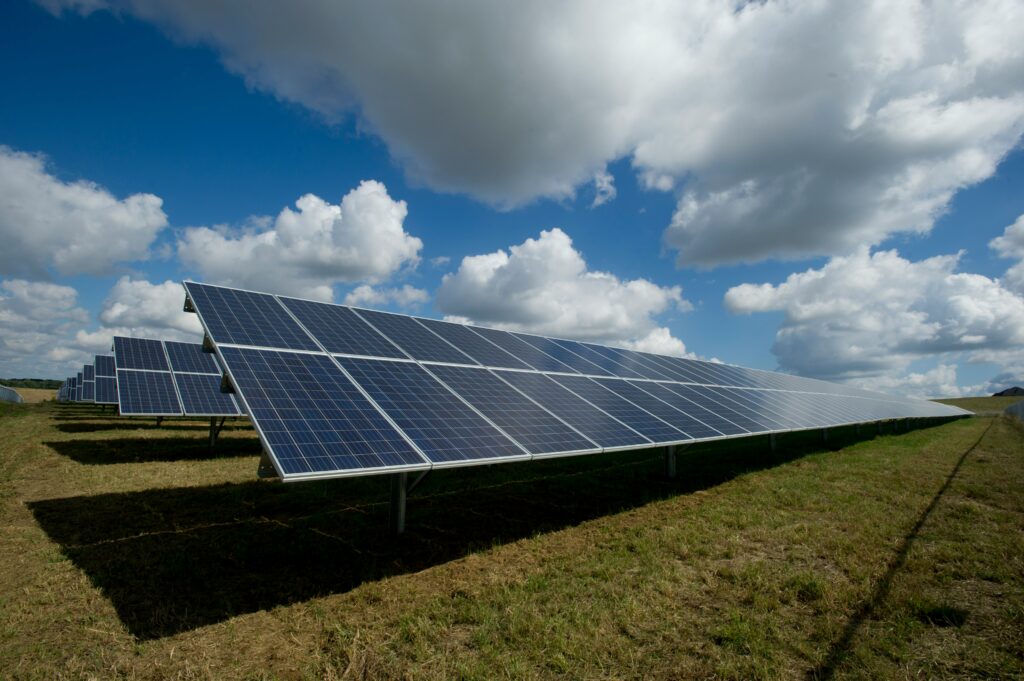
I have been supervising a solar PV system for a cement plant in Morocco for the past few years. Every morning I check the production data, the performance ratio, the soiling losses — and every day I realize how little practical content exists in English for industrial solar in our region.
This is why I started writing. Not theory. Not datasheets. Real experience from a real site.
Here is what I know about solar PV autoconsumption for cement plants — from someone who actually works on one.
What is solar autoconsumption for industry?
In my daily work, this is the model that makes the most sense for heavy industry — and here is why.
Autoconsumption means the electricity produced by your solar array is consumed directly by your facility — without going through the public grid. You only draw from the grid when your solar production is insufficient.
For a cement plant, this model is particularly well-suited because :
- Production runs continuously, 24/7 in many cases
- Daytime electricity demand is high and predictable
- The plant has large roof areas, open land, and existing electrical infrastructure
- The load profile — crushing, grinding, conveying — matches well with solar peak hours
Key technical parameters before sizing your system
I have made sizing mistakes early in my career. These four parameters now come first — before any number goes on paper.
Before any engineer puts numbers on paper, four parameters must be clearly established :
1. Actual load profile
Getting a 15-minute interval power logger on your main feeders for at least 30 days is non-negotiable. A cement plant’s demand curve is not flat. Kiln startups, mill stops, and shift changes create significant fluctuations. Your solar system must be sized against this real curve — not the nameplate capacity of your equipment.
2. Available irradiation data
In Morocco and across North Africa, GHI typically ranges from 5.0 to 6.5 kWh/m²/day depending on location. Use NASA POWER or PVGIS — not a generic assumption.
3. Grid interconnection constraints
Does your local utility allow reverse injection? In most MENA countries, net metering for industrial clients is limited or absent. Size to cover 80–90% of your baseload — not 100% of peak demand.
4. Existing electrical infrastructure
The position of your main LV/MV substation, available switchgear capacity, and cable routing paths will significantly affect your balance-of-system costs. I have seen projects where civil works alone added 15% to total installed cost because nobody mapped the cable routes early.
Typical system architecture for a cement plant
This is the configuration I work with every day — adapted for industrial environments in hot climates.
A C&I solar system for a cement plant in the 1–10 MWp range typically includes :
- Bifacial monocrystalline modules — 670 to 700 Wp per panel is now standard
- String inverters or central inverters depending on layout complexity
- DC and AC combiner boxes rated for industrial environments — IP65 minimum
- SCADA integration with existing plant DCS system
- Revenue-grade energy meters at point of common coupling
- Surge protection and remote monitoring
The key design challenge is integrating the solar SCADA with the plant’s existing automation system. Cement plants run Siemens, ABB, or Schneider platforms. Your solar contractor must speak both languages.
ROI — what numbers are realistic?
These numbers are based on what I have observed directly — not on marketing brochures or optimistic feasibility studies.
Based on projects in Morocco and comparable North African markets :
- Installed cost : USD 0.45 to 0.75 per Wp
- LCOE of solar : USD 0.025 to 0.040 per kWh over 25 years
- Grid tariff for industrial clients in Morocco : roughly USD 0.10 to 0.14 per kWh
- Simple payback period : 4 to 7 years
- IRR : 12 to 22% depending on financing structure
These numbers make solar autoconsumption one of the highest-return capital investments available to a cement producer in this region today.
Common mistakes I see on industrial solar projects
These are not hypothetical mistakes. I have seen every single one of them on real projects — and some of them cost serious money.
Undersizing the DC/AC ratio
For MENA climates, a ratio of 1.25 to 1.35 is appropriate. Many contractors propose 1.1 to reduce inverter clipping on paper — but you lose real production in the high-irradiance shoulder months.
Ignoring soiling losses
Cement dust is one of the worst soiling agents for PV panels. A cleaning schedule of every 2 to 3 weeks is necessary near clinker or cement handling areas. Factor 3 to 5% soiling losses into your yield model.
Poor grounding and surge protection
Industrial sites have significant electrical noise. A weak earthing system will damage inverters within the first year. Invest in a proper equipotential bonding study.
No performance ratio baseline
Establish a clear PR target — typically 78 to 82% for MENA conditions — before commissioning. Without a baseline, you have no way to detect degradation or underperformance over time.
Conclusion
Solar PV autoconsumption for cement plants is not a marketing promise. It is a bankable, technically proven investment with solid fundamentals — high irradiation, high grid tariffs, predictable industrial load, and declining module costs.
If you are working on a solar project for an industrial facility in Africa or MENA — I hope this article gave you something useful.
I write from field experience, not from theory. If you have questions or want to discuss a specific project, the contact form is open.
More articles coming soon — sizing calculations, O&M procedures, and AI applications for solar supervision.
Publié par :
Solar PV MENA Expert