
Published on: Jun 20, 2026.
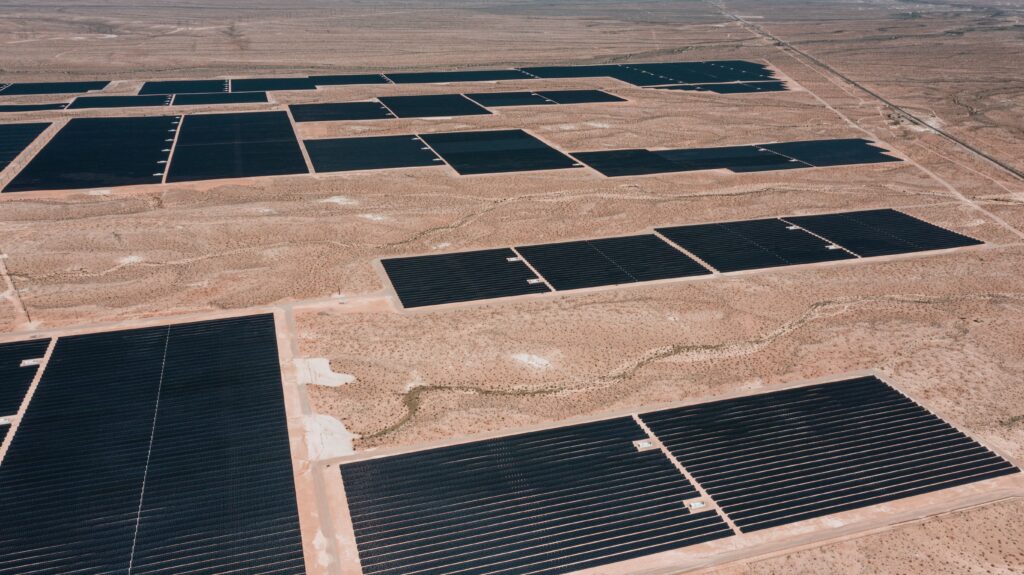
There is a number that keeps appearing in every conversation about green hydrogen Morocco right now.
$32.5 billion.
That is the value of green hydrogen projects formally approved by the Moroccan government — 319 billion dirhams committed to a sector that barely existed as an industrial reality five years ago. Six projects awarded to five international consortia. Preliminary land reservation contracts signed in February 2026 with five additional investors. One million hectares of public land allocated for wind and solar development dedicated exclusively to green hydrogen production.
The ambition is real. The financing is real. The international partners — Acciona, Nordex, Ortus, TotalEnergies, ENGIE — are real.
But behind every kilogram of green hydrogen that Morocco plans to produce, there is a solar PV system that has to perform — consistently, reliably, and at a level that no feasibility study fully captures.
That is where this article begins.
Disclosure: This article contains affiliate links. If you purchase through these links, I may earn a small commission at no extra cost to you. I only recommend technical resources that I consider genuinely useful for industrial solar professionals working in Africa and the MENA region.
What Green Hydrogen Actually Is — And Why Solar PV Is Its Foundation
Green hydrogen is produced through electrolysis — passing an electrical current through water to split it into hydrogen and oxygen. The process itself is clean. What makes it green is the source of that electricity: renewable energy, primarily solar PV and wind.
No renewable electricity — no green hydrogen. It is that direct.
Morocco’s flagship pilot project, the Power to Hydrogen initiative led by MASEN and financed with 300 million euros by Germany’s KfW development bank, will produce 10,000 tonnes of green hydrogen annually. The electrolyzer capacity is at least 100 MW, powered by a 200 MW hybrid solar and wind plant located in the Guelmim-Oued Noun region, connected to a seawater desalination unit in Tan-Tan.
That 200 MW solar and wind plant is not a detail. It is the entire foundation of the project. Without consistent, high-quality solar PV output feeding the electrolyzer, hydrogen production drops, unit costs rise, and the economics of the entire investment deteriorate.
This is the connection that most coverage of Morocco’s green hydrogen ambition never discusses. Everyone talks about the electrolyzer. Almost nobody talks about what the solar plant behind it needs to deliver — and what happens when it does not.
The Scale of What Morocco Is Building
Morocco’s green hydrogen strategy has moved decisively from planning into execution in 2026, with a portfolio of projects representing a cumulative investment of approximately 319 billion dirhams now in active development, largely in the country’s southern provinces.
To put that in perspective for an industrial energy professional:
$32.5 billion USD in approved green hydrogen projects
1 million hectares of public land allocated for solar and wind development
MASEN estimates Morocco could satisfy more than 4% of global green hydrogen demand
Export targets: Germany, Netherlands, and EU markets — under the REPowerEU agenda which commits to importing 10 million tonnes of green hydrogen annually by 2030
Morocco’s renewable energy target: 52% of total installed capacity by 2030 — up from 45% today
The strategic logic is sound. Morocco has exceptional solar irradiation — particularly in its southern provinces. It has access to Atlantic seawater for electrolysis. It has proximity to European markets hungry for decarbonized energy. And it has demonstrated — through the Noor Ouarzazate solar complex and now through MASEN’s hydrogen program — the institutional capacity to execute complex renewable energy projects at scale.
But strategy and execution are two different things. And execution, in the context of solar-powered green hydrogen, lives or dies on one variable above all others: the actual performance of the solar PV infrastructure.
What a Green Hydrogen Plant Demands From Its Solar PV System
This is the technical conversation that investment announcements never have — and the one that matters most for anyone working in industrial solar in the MENA region.
An electrolyzer is not a passive load. It is a precision industrial machine that requires stable, consistent electrical input to operate efficiently and maintain its performance over time.
What this means in practice for the solar PV system feeding a green hydrogen plant comes down to four operational realities.
Performance Ratio is not just a KPI — it is a direct production input.
Every percentage point of PR loss on the solar plant translates directly into less electricity delivered to the electrolyzer — and less hydrogen produced per hour. The relationship is not theoretical. It is mathematical.
Here is what it looks like in practice on a 200 MW solar plant feeding a 100 MW electrolyzer in Morocco:
| Performance Ratio | Electrolyzer Input | Annual H2 Production Impact | Financial Impact |
|---|---|---|---|
| PR 84% — well managed | 100% reference output | Reference baseline | Reference |
| PR 77% — real terrain average | 91.7% of reference | 8.3% production shortfall | Significant annual revenue loss |
| PR 70% — poor O&M | 83.3% of reference | 16.7% production shortfall | Structural project underperformance |
A solar plant running at PR 77% instead of PR 84% does not just underperform on paper. It reduces hydrogen output by the same margin — every hour, every day, for the entire operating life of the asset.
The current benchmark for green hydrogen production cost in optimal MENA conditions sits between 2.5 and 4.5 USD per kilogram — compared to 1.0 to 1.5 USD per kilogram for grey hydrogen from fossil fuels. Every percentage point of sustained PR loss on the solar plant pushes that cost upward — directly eroding the competitive advantage that Morocco’s exceptional solar resource is supposed to provide.
Soiling in the Guelmim-Oued Noun region is not a standard assumption — it is a real operational challenge.
The southern provinces of Morocco where these hydrogen projects are being developed are arid, dusty, and subject to sand transport events that can deposit particulate matter on panel surfaces within hours of cleaning.
Standard feasibility studies for Moroccan solar projects assume soiling losses of 3% to 5% annually. On industrial and arid sites with ground-level activity, that figure rises to 5% to 8% as a sustained operational reality. On a 200 MW solar plant, the difference between a 3% soiling assumption and a 7% actual soiling loss represents a meaningful and compounding reduction in hydrogen output year after year — built into the project’s economics from day one if the O&M plan does not account for it.
Thermal derating affects every solar installation in this climate — including the ones feeding electrolyzers.
Inverter rooms in the Guelmim-Oued Noun region in summer face the same thermal environment as every other industrial solar installation in Morocco. Ambient temperatures exceeding 50°C during peak summer months trigger thermal derating on string and central inverters — reducing output by 6% to 12% without triggering a single alarm on the monitoring system.
For a green hydrogen plant, this creates a specific operational problem: the hours of highest solar irradiation — the hours when hydrogen production should be at its peak — are precisely the hours when thermal derating is most severe. Peak irradiation and peak inverter temperature arrive together. The production losses compound exactly when they are most costly.
Input power quality directly affects electrolyzer performance and lifetime.
Fluctuations in solar output — caused by passing clouds, soiling events, or thermal derating — stress the power conditioning units and create variable operating conditions inside the electrolyzer. Current density, temperature, and operational dynamics determine not only the efficiency but also the degradation rate and output purity of electrolysis systems.
A solar plant that delivers stable, consistent power output at high PR levels is not just performing well financially. It is actively protecting the electrolyzer from stress cycles that accelerate degradation and shorten its operational lifetime — a direct impact on the long-term economics of a billion-dollar investment.
For engineers and project developers who want to understand this relationship with rigorous analytical depth, Hydrogen Production by Electrolysis edited by Agata Godula-Jopek provides one of the most comprehensive technical references available on the integration of renewable energy sources with electrolysis systems. If you are sizing a solar plant to feed an electrolyzer — or reviewing a feasibility study that does — this book will show you exactly what standard models miss about input power quality, efficiency curves under variable irradiation, and the operational parameters that determine real hydrogen production costs versus projected ones.
The Feasibility Study Gap — Again, at a Larger Scale
Anyone who has reviewed a solar PV feasibility study in Morocco recognizes the same pattern: irradiation data sourced from satellite models, soiling losses set at industry-standard estimates, inverter thermal behavior modeled at rated conditions.
These gaps do not disappear when the project scales from 2 MW to 200 MW. They scale with the project — and their financial consequences scale with the investment.
The industrial logic of Morocco’s hydrogen strategy rests on the country’s exceptional solar and wind endowment generating among the lowest production costs for green hydrogen globally. That cost advantage is real — but it is conditional on the solar PV infrastructure actually delivering what the model says it will deliver.
A Levelized Cost of Hydrogen calculation built on a PR of 84% looks very different from one recalculated at a sustained PR of 77%. The difference is not a rounding error in a financial model. It is the difference between a competitive green hydrogen price and one that struggles to justify the investment at scale.
What This Means for Industrial Solar Professionals in MENA
Morocco’s $32.5 billion green hydrogen commitment is a construction program that will deploy hundreds of megawatts of solar PV across the southern provinces over the next five to ten years.
Every one of those megawatts will need to be supervised, maintained, and optimized with the same rigor that applies to any industrial solar installation — with one additional layer of consequence: underperformance does not just reduce energy savings. It reduces hydrogen output, raises the levelized cost of hydrogen, and compromises the economics of investments measured in billions of dollars.
The dust does not care about project size. The heat does not care about investment volume. The soiling that returns within three days of cleaning on an industrial installation in central Morocco will return within three days of cleaning on a 200 MW installation in Guelmim.
The operational challenges are identical. The financial consequences are proportionally larger.
For the engineers and supervisors who will work on these installations, the operational lessons from industrial solar in Morocco are clear:
Model soiling at 5% to 8% for industrial and arid sites — not 3%. Include inverter thermal derating in your sensitivity analysis for summer months. Budget O&M costs based on actual cleaning frequency requirements, not European benchmarks. And build a supervision approach that goes beyond dashboard monitoring — because the most expensive losses on these installations will not trigger a single alarm.
Morocco is building something genuinely significant. The $32.5 billion green hydrogen commitment, the MASEN Power to Hydrogen pilot, the international consortia deploying across the southern provinces — this is not a vision document. It is an industrial program in active execution.
At its foundation — under every electrolyzer, behind every tonne of green hydrogen — is a solar PV plant that has to perform.
The gap between what feasibility models say that plant will deliver and what it actually delivers in the Moroccan industrial environment is not a small rounding error. It is a measurable, predictable, and manageable operational reality — if the right people are asking the right questions before and after construction begins.
Morocco has the solar resource. It has the strategic framework. It has the international partnerships.
What will determine whether the $32.5 billion delivers its promised return is the same thing that determines the return on every industrial solar installation in this country: operational discipline, honest performance measurement, and supervision that goes beyond what the dashboard shows.
The ambition is set. The execution is everything.
Looking for verified data?
The field insights behind this article are fully documented in the MENA Industrial Solar Data Guide. Get access to real project costs, actual KPIs, and genuine O&M benchmarks from a live industrial installation in the MENA region.
👉📘 75 pages of pure field data. Zero simulations.
👉 Get the Guide — $29 USD
Get the Free Preview
The first 8 pages of the MENA Industrial Solar Data Guide — real Performance Ratio data, soiling measurements, and thermal derating figures from an industrial installation— No spam, just real data.
Disclosure: This article contains affiliate links. If you purchase through these links, I may earn a small commission at no extra cost to you. I only recommend technical resources that I consider genuinely useful for industrial solar professionals working in Africa and the MENA region.
Publié par :
Solar PV MENA Expert