
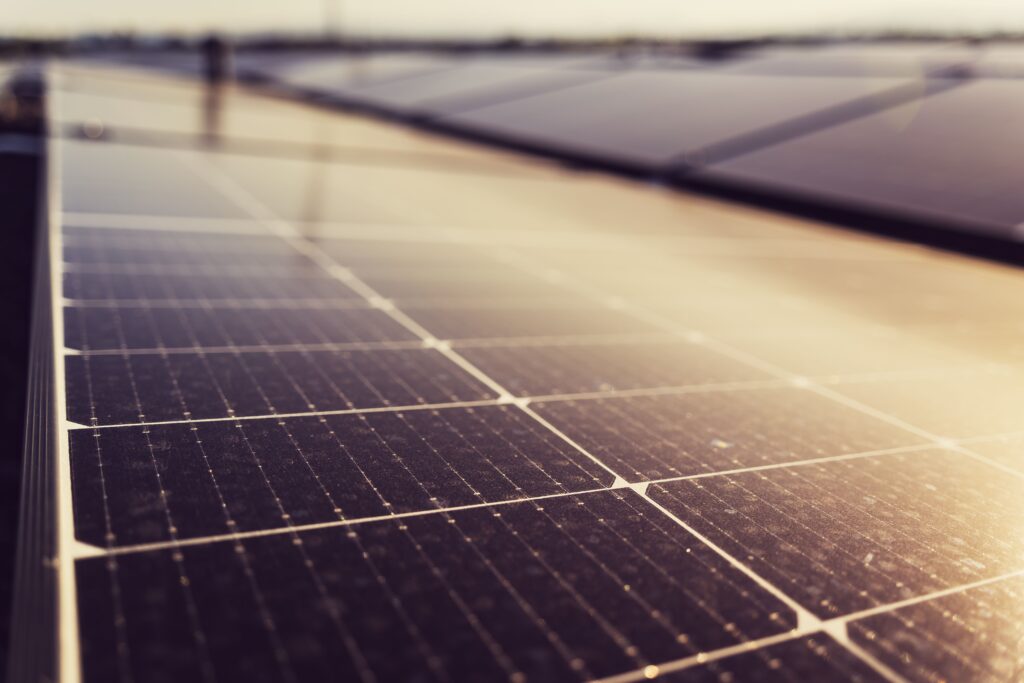
Two years ago, a business plan said this plant would perform at a certain level, generate a certain return, and behave in a certain way.
Two years later, the data says something more interesting.
Not worse. Not better. More honest. More detailed. More useful for anyone who is about to make a significant financial decision about industrial solar in North Africa — or anywhere in the MENA region where the sun is strong, the dust is real, and the gap between projected and actual performance is rarely discussed openly.
This article is that discussion.
Every figure here comes from direct measurement on a real 2 MWp on-grid autoconsumption installation at an industrial facility in Morocco. No simulations. No adjusted baselines. No marketing.
Disclosure: This article contains affiliate links. If you purchase through these links, I may earn a small commission at no extra cost to you. I only recommend technical resources that I consider genuinely useful for industrial solar professionals working in Africa and the MENA region.
The Plant in Numbers — Baseline Reality
Before analyzing performance, here is the installation as it actually exists:
Installed capacity: 2 MWp
Panel technology: 3,448 monocrystalline panels — LONGi 580 Wp
System type: On-grid autoconsumption — no battery storage
Location: Central Morocco
Peak sun hours: 5.6 hours per day — annual average
Total project cost: 2 million USD
Annual energy savings: approximately 360,000 USD
Monthly savings: approximately 30,000 USD
Simple payback: approximately 6 years
IRR observed: 12% to 18%
Performance Ratio observed: 77% to 84%
These are the numbers that matter to an investor, a technical director, or an engineer evaluating a similar project. They are also the numbers that most feasibility studies get partially wrong — not through incompetence, but through assumptions that do not survive contact with a North African industrial environment.
What the Performance Ratio Actually Tells You
A Performance Ratio of 77% to 84% on a well-maintained industrial installation in Morocco is a realistic and honest range. It is not exceptional. It is not disappointing. It is what the physics and the operating environment actually produce when you measure carefully.
For context: European installations in moderate climates often report PR values of 80% to 85% with lower soiling and lower thermal stress. In MENA conditions — with dust, heat, and industrial contamination — a PR consistently above 77% requires active and disciplined maintenance. Below that threshold, something specific is wrong and needs to be identified.
The PR variation between 77% and 84% on this installation is not random. It tracks directly with three measurable factors.
First, soiling accumulation between cleaning cycles. After each cleaning, PR rises. Within three to four days on an industrial site, dust and particulate contamination begin eroding it again. The decay curve is faster than any standard feasibility study models for Morocco — where most studies assume 3% to 5% soiling loss annually. On a heavy industrial site, that figure is closer to 5% to 8% as a sustained operating reality.
Second, inverter room temperature during summer months. When ambient temperature in the inverter room exceeds 50°C — which occurs regularly from June through September — thermal derating reduces output by 6% to 12%. This loss is invisible on standard monitoring dashboards and absent from most feasibility models.
Third, string-level degradation and partial shading events. String losses exceeding 15% have been identified on this installation through physical inspection — not through monitoring alerts. This is manual work that requires being on site, with instruments, with a systematic approach.
These three factors together explain the gap between the PR the model predicted and the PR the plant actually delivers.
What Performed Better Than Expected
Honest analysis requires acknowledging what worked well — not only what underperformed.
Panel durability and consistency
The LONGi monocrystalline 580 Wp panels have performed within expected degradation parameters over the observation period. No significant early-life degradation anomalies. No unexpected delamination or hotspot clustering beyond what physical inspection reveals as normal for the environment. The panel technology at this power class has matured considerably — this is a reliable choice for industrial MENA installations.
Monthly savings stability
The 30,000 USD per month savings figure has proven to be a reliable floor, not an optimistic projection. In months with above-average irradiation and well-maintained equipment, the figure exceeds this baseline. The energy offset model for industrial autoconsumption in Morocco — where industrial electricity tariffs are significant — makes the financial case more resilient to performance variations than a grid-export model would be.
Return on investment trajectory
At current performance levels, the 6-year payback and 12% to 18% IRR range remain valid. These are strong numbers for a capital-intensive infrastructure investment in an emerging market context. The IRR range reflects the sensitivity to O&M costs and performance ratio — not uncertainty about the fundamental economics.
The maintenance team as a performance asset
This point is consistently undervalued in feasibility studies, which model equipment but rarely model human factors. The relationship with the on-site maintenance team has proven to be the single most important operational variable on this installation. Their knowledge of the site — the strings that need closer attention, the areas with higher soiling rates, the inverter behaviors that precede faults — is irreplaceable and not captured in any monitoring system.
What Performed Worse Than Expected
Soiling — the most systematically underestimated loss in North Africa.
The standard assumption in Moroccan feasibility studies is a soiling loss of 3% to 5% annually. On a cement plant — or any heavy industrial site with particulate emissions, vehicle traffic, and proximity to raw material handling — this assumption does not hold.
Cleaning three times per month is the operational reality on this installation. That is not a conservative maintenance schedule. That is the minimum required to keep soiling from becoming a significant performance drag. And even at that frequency, soiling returns within days of each cleaning cycle.
The financial implication is twofold: higher water and labor costs than budgeted, and a baseline soiling loss that exceeds the model’s assumption during the intervals between cleaning cycles.
Irradiation modeling — the optimism problem.
The P50 irradiation figure used in the feasibility study for this installation was not accompanied by a meaningful uncertainty buffer. P50 means there is a 50% probability of achieving that yield in any given year. It also means there is a 50% probability of falling short.
For a bankable project — or any project where cash flow projections drive a financing or investment decision — using P50 without a P90 sensitivity case is not conservative analysis. It is optimistic modeling presented as engineering rigor.
In practice, year-to-year irradiation variability in Morocco adds a layer of performance uncertainty that compounds with soiling and thermal losses. The combination of these three factors in a difficult year can push actual production meaningfully below the base case projection.
Inverter room thermal losses — the silent drain.
At 52°C ambient temperature in the inverter room during summer, with observed thermal derating of 6% to 12%, the annual financial impact on this installation exceeds 9,600 USD per year. This comes from a cause that generates zero alerts and appears nowhere in the standard monitoring report. It is a structural performance gap that was never modeled at the design stage — and that silently erodes returns every summer for the entire life of the asset.
The Monitoring Gap — What the Dashboard Never Showed
Two years of operating a monitored industrial solar installation produces one clear conclusion: the dashboard is a vital tool and an incomplete one simultaneously.
Here is what monitoring does well: it tracks total production, flags inverter faults, records energy export and consumption data, and provides the historical dataset needed for trend analysis. These are genuine and important functions.
Here is what monitoring does not do: it does not detect gradual string degradation below the alarm threshold. It does not identify soiling loss as distinct from irradiation variability. It does not measure inverter room temperature or flag thermal derating events. It does not replace physical inspection.
String losses identified through physical inspection — and invisible to the monitoring system — represent the clearest illustration of the gap between what data shows and what the plant actually does. The monitoring system confirmed the installation was alive. Physical inspection revealed it was underperforming.
This is not a criticism of monitoring technology. It is a calibration of expectations. A monitoring system tells you what is happening at the meter. A supervision approach tells you why.
The Maintenance Reality After 24 Months
O&M on an industrial solar installation in Morocco is more labor-intensive and more technically demanding than most feasibility studies budget for.
Cleaning frequency of three times per month — rather than the once or twice per month often assumed in O&M cost models — has a direct impact on water consumption, labor costs, and logistics. On a large installation, this is not a minor budget line.
Preventive maintenance — thermal imaging of panels, string-level current measurement, inverter log analysis, mechanical inspection of mounting structures — requires a structured schedule and competent execution. The value of this work is not visible on a dashboard. Its absence, however, becomes visible in performance data within months.
For engineers and O&M managers who want to build a rigorous maintenance framework for large-scale PV installations, Solar Energy Engineering: Processes and Systems by Soteris Kalogirou provides one of the most comprehensive analytical foundations available — covering degradation mechanisms, system-level performance modeling, and maintenance strategies with genuine technical depth. It is particularly useful for understanding the long-term degradation curves that determine whether a 25-year financial model holds — and what operational practices most effectively slow the degradation rate in high-irradiation, high-temperature environments.
The Financial Reality After 24 Months
The core financial metrics remain valid. The 6-year payback and 12% to 18% IRR are achievable at current performance levels — provided O&M costs are managed, soiling is actively controlled, and thermal losses in the inverter room are addressed.
What two years of real data adds to the financial picture is granularity and honesty about sensitivity.
The difference between a PR of 77% and a PR of 84% is not academic. On an installation generating 360,000 USD per year at full performance, a sustained 7-percentage-point PR gap represents approximately 25,000 USD per year in unrealized savings.
To make this concrete: 25,000 USD per year × 25 years = 625,000 USD over the project lifetime — roughly 31% of the original project cost of 2 million USD — lost not to equipment failure, but to operational gaps that are measurable, manageable, and largely preventable.
For investors and financial decision-makers evaluating industrial solar in emerging markets, Renewable Energy Finance: Funding the Future of Energy by Charles Donovan offers a rigorous framework for understanding how operational performance variability translates into financial risk — and how to structure investment decisions that account for the real-world gap between modeled and actual returns.
The practical implication for any project currently in development or early operation in the MENA region is straightforward: model your P90 scenario with realistic soiling assumptions, include inverter thermal losses in your sensitivity analysis, and budget O&M costs based on actual cleaning frequency requirements for your specific site environment — not on generic industry benchmarks.
What the Feasibility Study Got Wrong — And What It Got Right
This is not an indictment of feasibility studies. It is an honest accounting of where the gap between model and reality consistently appears in the MENA industrial solar context.
What the study underestimated:
Soiling loss: modeled at 3% to 5% — actual sustained loss on a heavy industrial site is 5% to 8%
Inverter thermal derating: not modeled — actual loss of 6% to 12% during summer peak hours
O&M cost intensity: cleaning frequency and preventive maintenance requirements higher than standard assumptions
Irradiation uncertainty: P50 used without P90 sensitivity case
What the study got right:
Panel technology selection and degradation rate assumptions
General system sizing and energy offset calculation
Core savings projection of 360,000 USD per year — confirmed as a measured outcome
IRR range and payback period — valid at actual performance levels
Knowing where the gaps are is not a reason to distrust feasibility studies. It is the beginning of using them correctly.
With that honest accounting established, two years of real operational data produce one clear and bankable conclusion.
A feasibility study tells you what a plant can do under modeled conditions. Two years of operation tell you what it actually does under real ones.
The gap between those two sentences is not a failure of engineering. It is the natural distance between a model and a living system operating in a complex environment — dust, heat, industrial contamination, human variability, equipment aging — that no model fully captures.
What two years of direct operational data on this installation confirm is this: industrial solar in Morocco works. The economics are real. The 360,000 USD per year in savings is not a projection anymore — it is a measured outcome. The 6-year payback and 12% to 18% IRR are achievable.
What they also confirm is that achieving those outcomes requires active supervision — not passive monitoring. It requires being on site, measuring what the dashboard does not show, managing soiling more aggressively than the model assumed, and treating the inverter room as a performance-critical space rather than an afterthought.
The plants that will perform at the high end of the PR range over 25 years are not the ones with the best equipment. They are the ones with the most rigorous operational discipline.
The data does not lie. But it only tells you what you measure.
Looking for verified data?
The field insights behind this article are fully documented in the MENA Industrial Solar Data Guide. Get access to real project costs, actual KPIs, and genuine O&M benchmarks from a live industrial installation in the MENA region.
👉📘 75 pages of pure field data. Zero simulations.
👉 Get the Guide — $29 USD
Get the Free Preview
The first 8 pages of the MENA Industrial Solar Data Guide — real Performance Ratio data, soiling measurements, and thermal derating figures from an industrial installation— No spam, just real data.
Disclosure: This article contains affiliate links. If you purchase through these links, I may earn a small commission at no extra cost to you. I only recommend technical resources that I consider genuinely useful for industrial solar professionals working in Africa and the MENA region.
Publié par :
Solar PV MENA Expert